In the modern global economy, effective talent acquisition is inseparable from rigorous compliance. HR professionals and hiring managers operating across state lines and international borders must contend with a dense and ever-evolving body of background check laws. Failure to adhere to these complex regulations—from consent requirements to adverse action procedures—can expose organizations to devastating fines, lengthy litigation, and irreparable reputational damage. The challenge lies in performing comprehensive due diligence while remaining fully compliant and cost-effective.
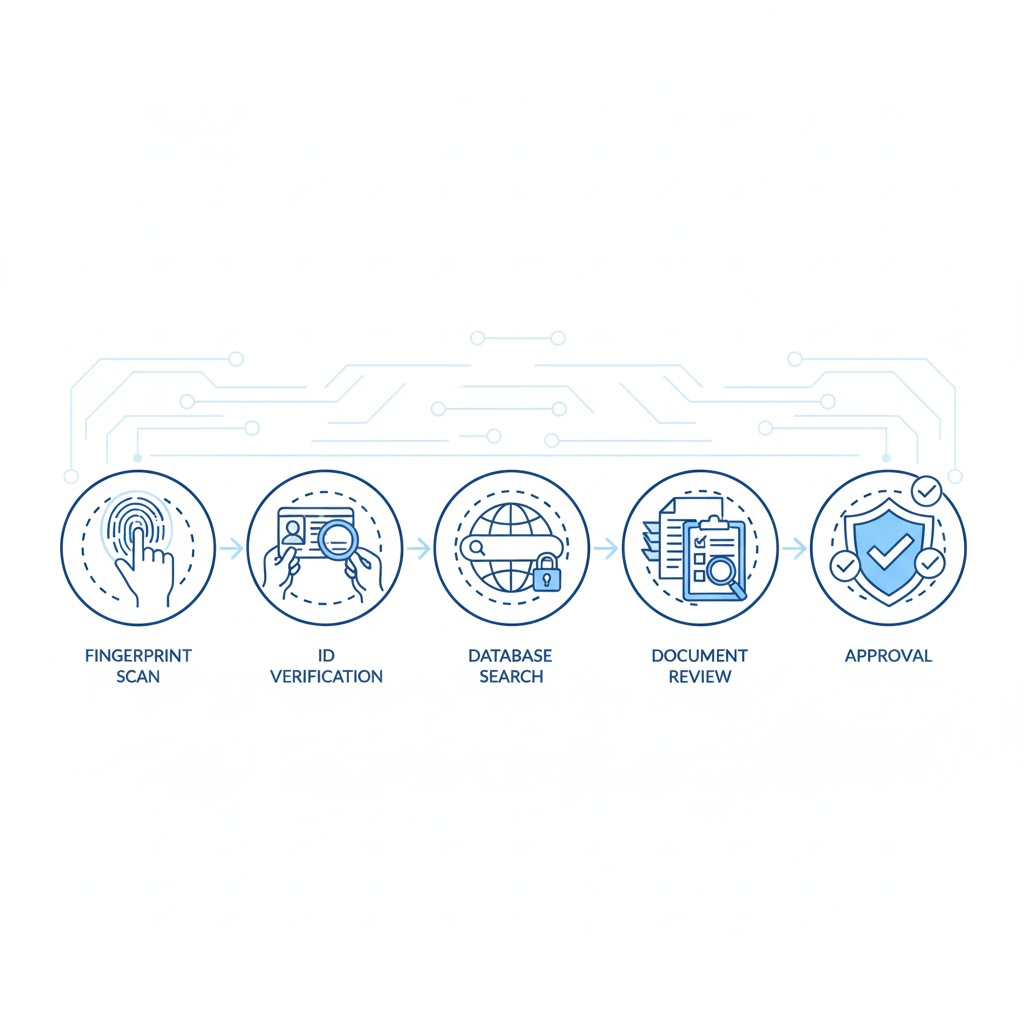
At Screenaze, we specialize in transforming the complexity of background check laws and global compliance into a streamlined, secure solution. We understand that navigating regulations like the FCRA, GDPR, and state-specific mandates requires expert precision. Our mission is to provide organizations with highly accurate, compliant, and cost-effective background verification services, including detailed Criminal Checks, thorough Employment Verification, and essential Identity Checks. This guide will illuminate the crucial legal frameworks governing background screening, detail the necessary compliance steps, and demonstrate how partnering with an expert service minimizes risk and maximizes value.
Additionally, understanding how to check criminal history is essential for making informed hiring decisions. This process involves reviewing an individual’s criminal background to assess their suitability for employment and ensuring compliance with legal standards.
The Mandate of Compliance: Why Background Check Laws are Crucial
Every organization, regardless of its size, is bound by background check laws designed to protect applicants’ rights and privacy while ensuring fair hiring practices. These laws dictate:
- Consent: Obtaining explicit, written authorization before commencing a background check.
- Adverse Action: Following specific procedural steps (such as providing pre-adverse action notice) if the screening results lead to a negative hiring decision.
- Data Usage and Retention: Governing how sensitive personal information is stored, used, and eventually destroyed.
Ignoring these legal mandates places organizations at severe risk. Compliance is not just about avoiding penalties; it demonstrates a commitment to ethical hiring and due diligence, which fundamentally enhances a company’s trustworthiness (EEAT). This legal framework protects both the applicant and the employer from future conflicts and ensures all hiring decisions are equitable.
Navigating Global and Domestic Background Check Laws
The legal landscape for background screening is bifurcated into broad national and international regulations and highly specific local statutes. Mastery of both is essential for effective global hiring.
The Federal Framework: FCRA and the USA
In the United States, the Fair Credit Reporting Act (FCRA) is the foundational law governing third-party background screening companies (Consumer Reporting Agencies or CRAs) and the employers who use their reports.
The FCRA imposes strict requirements regarding disclosure, authorization, and accuracy. Key provisions mandate that job applicants must be notified in a stand-alone document that a report may be obtained and must provide written consent. Crucially, the FCRA outlines the specific two-step process for adverse action, ensuring fairness when a background check influences a hiring decision.
The International Standard: GDPR and Data Privacy
For organizations screening candidates in or from Europe, the General Data Protection Regulation (GDPR) imposes stringent rules on processing personal data.
The GDPR emphasizes lawful processing, minimization of data, and specific retention limits. Under GDPR, consent must be freely given, specific, informed, and unambiguous. This impacts global hiring significantly, requiring a more cautious and transparent approach, particularly when transferring data across international borders. Compliance requires understanding the interplay between the FCRA (governing the report) and the GDPR (governing the data subject’s rights).
State and Local Laws: “Ban the Box” and Reporting Limits
Beyond federal and international mandates, state and local “Ban the Box” laws—such as those in California, New York, and numerous major cities—prohibit employers from asking about criminal history on initial job applications.
Additionally, many states limit the reporting of certain convictions (e.g., records older than seven years) or restrict the use of arrests that did not lead to convictions. Specialized checks must be tailored to these state-specific nuances to avoid violations, meaning that what is compliant in one state may be illegal in another. Staying current with these localized background check laws is a continuous and complex exercise that demands expert knowledge.
The Three Pillars of Compliant and Effective Verification
Compliance requires more than just filling out forms; it demands accurate data, validated identity, and verified professional claims.
1. Robust Criminal Checks
A compliant Criminal Check involves multiple layers to ensure accuracy and legal admissibility of records.
- Criminal Record Check via Law Firm: Ensures reports are gathered and interpreted with legal precision, mitigating risks associated with misreported data.
- Court Record Check: Accessing primary source court data is essential for the highest level of accuracy, often necessary to confirm database hits and satisfy compliance requirements.
- Global Database Check: Necessary for global hiring, this ensures international compliance with sanctions lists and identifying transnational risks.
- Indian Database Check: Compliant access to country-specific judicial and criminal records, adhering to local data access protocols.
2. Comprehensive Employment Verification
Validating the professional narrative is a crucial step in due diligence that reduces risks associated with inflated or fabricated résumés.
- Employment Checks: Verify titles, dates, and roles, ensuring the candidate meets the foundational requirements of the job.
- Education Check: Confirms academic credentials directly with institutions, preventing qualification fraud.
- Reference Check: Gathers qualitative feedback on performance and character, ensuring the candidate is a cultural and professional fit.
- Gap Check: Investigates unexplained breaks in employment, which could be required to mitigate security concerns in sensitive roles.
- UAN Check: For Indian candidates, this verifies formal, recorded employment history through the Universal Account Number database.
3. Identity and Foundational Checks
Confirming the candidate’s identity is the first step in compliant screening, ensuring the records belong to the correct individual.
- Passport Check & Driving License Check: Verifies official government-issued identification against primary sources.
- Pan Card Check & Aadhar Card Check: Essential for confirming the identity of candidates in India for legal compliance.
- Address Check: Confirms residential history, often required for jurisdictional criminal searches and compliance with FCRA record retention guidelines.
- Credit Check & Drug Check: Conducted only when permissible by law and directly relevant to the role (e.g., financial management or safety-sensitive positions), with strict adherence to required consent.
Cost-Effectiveness Through Compliance and Risk Mitigation
While some view strict adherence to background check laws as a burden, it is, in reality, the most cost-effective path to security.
Avoiding Penalties and Litigation
The fines associated with FCRA violations can run into the thousands per violation, and class-action lawsuits can be catastrophic. By ensuring compliant processes, organizations save exponentially more than the cost of a premium screening service. Compliance is an insurance policy against potentially devastating legal expenses.
Enhancing Hiring Quality
A comprehensive, compliant screening process that includes detailed Work Experience Checks and Criminal Checks directly leads to higher quality hires. This reduces staff turnover, minimizes the need for costly re-recruitment, and protects the company from internal losses. The increased efficiency and reliability resulting from proper due diligence provide a tangible return on investment.
Use Cases: Compliance in Action
The seamless integration of global and domestic background check laws is essential for multi-jurisdictional success.
Use Case 1: Fintech Company Hiring Globally A London-based fintech firm is hiring developers in Poland and managers in New York. They must use a provider compliant with both GDPR (for the Polish hire) and the FCRA/state laws (for the NY hire). This requires tailored consent forms, a Global Database Check, and specialized adverse action procedures unique to each jurisdiction.
Use Case 2: National Transportation Firm A transportation company hiring truck drivers across the US must navigate dozens of state and county reporting limits and “Ban the Box” ordinances. They require streamlined services that automatically filter criminal records based on the job location to ensure compliance and avoid using prohibited information, along with mandatory Drug Checks and Driving License Checks.
Use Case 3: Public Sector Contractor A company contracting with the government requires employees to undergo high-level security clearances. These roles demand a meticulous Criminal Record Check via Law Firm, extensive Gap Checks dating back ten years, and detailed Reference Checks to meet stringent federal standards for trustworthiness and integrity, demonstrating the highest level of due diligence.
Frequently Asked Questions (FAQ)
Q1: What is the primary focus of the FCRA in background checks?
The primary focus of the FCRA is to protect the accuracy and privacy of information used in consumer reports and ensure fairness by regulating how Consumer Reporting Agencies and employers use background check data.
Q2: How does “Ban the Box” legislation affect background check laws?
“Ban the Box” legislation primarily affects when an employer can inquire about an applicant’s criminal history, typically delaying the inquiry until after a conditional job offer is extended.
Q3: Is it possible for an Education Check to violate GDPR?
An Education Check could potentially violate GDPR if the institution’s data is processed without a lawful basis or if data is retained longer than necessary, highlighting the need for specialized data processing protocols.
Q4: Why is an Address Check relevant to background check laws?
An Address Check is relevant because it establishes the correct jurisdictions for performing mandated criminal searches and helps ensure compliance with FCRA regulations regarding data accuracy and verification.
Q5: How does using a specialized provider ensure cost-effectiveness in compliance?
Using a specialized provider ensures cost-effectiveness by drastically reducing the risk of expensive compliance violations and legal penalties while streamlining the verification process to prevent costly hiring delays.
Secure Your Future: Partnering for Compliance and Confidence
The era of relying on generic database searches is over. Success in today’s competitive landscape requires a robust, compliant, and cost-effective screening strategy built around expert knowledge of background check laws. Screenaze provides the authoritative expertise and advanced tools necessary to navigate the complexities of global and domestic compliance, turning potential risks into assured due diligence. We are committed to helping you achieve maximum security and efficiency without sacrificing legal integrity.
Invest in compliance, mitigate your risk, and secure your talent pipeline. Start your secure and compliant verification process with Screenaze today.
For more detailed information on our compliant background screening solutions, visit [Insert the most relevant Screenaze service page link here, e.g., screenaze.com/criminal-check].